£7,500 at Stake: Rent a Room Allowance Rules for UK 2026
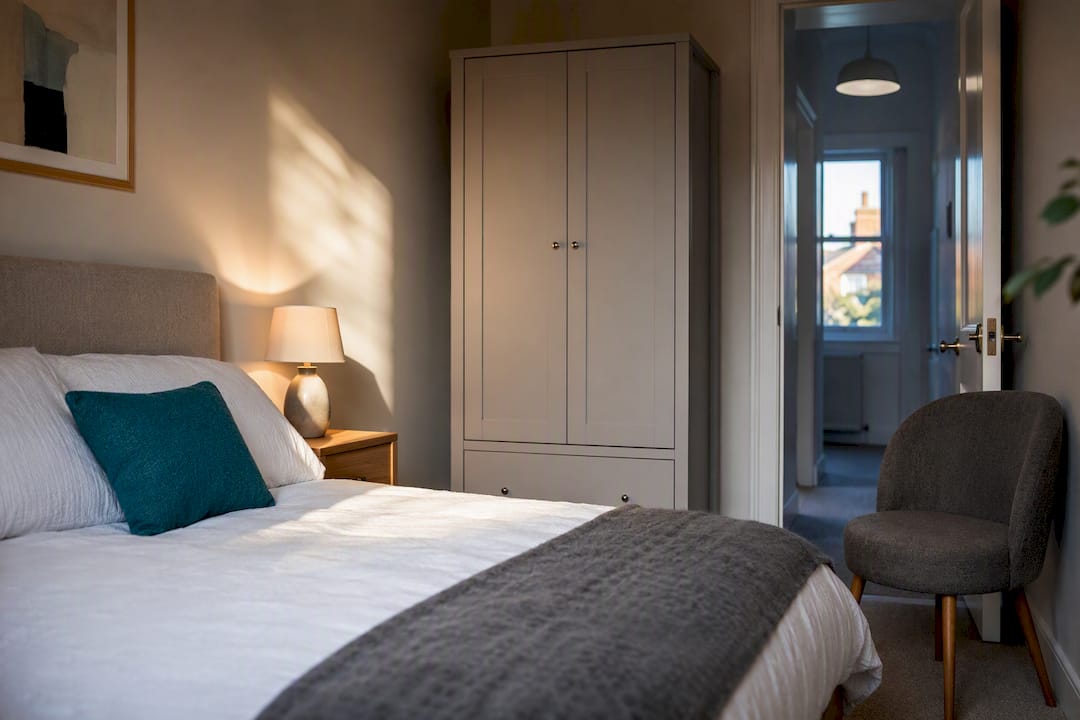
You can earn up to £7,500 a year tax-free by letting a furnished room in your main home, or £3,750 if someone else also receives income from the same property; for international landlords, understanding the UAE Tax Residency Certificate: A Guide For UK Taxpayers may also be beneficial. Below that limit, the exemption is automatic and you do nothing. Above it, you must register for self assessment and choose how the excess gets taxed.
TL;DR:
- Exceeding the £7,500 gross receipts threshold requires registering for self assessment and choosing between taxing actual profit or gross income only.
- Only owner-occupiers or tenants in their main home can qualify, and the room must be furnished within the property’s main living space.
- Short-term lets or moving mid-year can quickly push total income over the limit, so maintaining a running total throughout the year is crucial.
- Claiming expenses with Method A is beneficial if costs are high, while Method B is simpler and better if expenses are modest; run both calculations before filing.
- Good record-keeping is essential for accurate calculation, and using tools that track receipts can help determine the most tax-efficient method.
Table of Contents
- What is the Rent a Room allowance and how does it work?
- Who qualifies for the Rent a Room Scheme?
- When do you need to tell HMRC and what are the deadlines?
- Method A or Method B: which one saves you more?
- Moving home, joint owners and short lets: how the numbers actually work
- What are the benefits and limitations of the Rent a Room Scheme?
- Why good record-keeping decides which method wins
- A simpler way to track your Rent a Room income
- Sources
What is the Rent a Room allowance and how does it work?
The Rent a Room Scheme works on your gross receipts: the total rent you receive for furnished accommodation, before any deduction for bills, cleaning, or wear and tear. It does not matter what your actual costs were.
If your gross receipts are £7,500 or less for the tax year, the exemption is automatic and you do not need to tell HMRC or file a return for that income. You simply keep the money.
Cross that threshold and the picture changes. You now have to complete a self assessment return and choose between two ways of calculating the tax you owe. Without any action from you, HMRC defaults to taxing your actual profit. If gross receipts over the allowance suit you better, you have to say so, because HMRC’s HS223 helpsheet confirms the alternative method only applies once you elect for it.
Who qualifies for the Rent a Room Scheme?
Both owner-occupiers and tenants can use the scheme, provided the letting happens in your only or main home. It is not open to landlords letting out a second property they do not live in themselves.
The room has to be furnished. That generally means a bed, storage such as a wardrobe, and somewhere to sit, not a bare room with nothing in it. GOV.UK is explicit that the scheme normally does not apply if part of the house has been converted into a separate self-contained flat with its own entrance and facilities, because that arrangement no longer counts as letting within your own home. A property you were not living in during the relevant period also falls outside the scheme, regardless of how the room is furnished.
When do you need to tell HMRC and what are the deadlines?
Cross the £7,500 threshold (or £3,750 if shared) and you must register for self assessment and declare the rental income on your return. There is no way around this once gross receipts pass the limit.
If you want to use Method B, or you want to opt out of the scheme entirely, you generally need to notify HMRC by the same self assessment deadlines that apply to everyone else: 31 January following the end of the tax year for online filing and payment. HS223 also sets a one-year notification window from that 31 January deadline for certain elections, so it pays to decide early rather than scrambling in December.
Method A or Method B: which one saves you more?
Once you are over the allowance, HMRC gives you a choice, and it genuinely changes your tax bill.
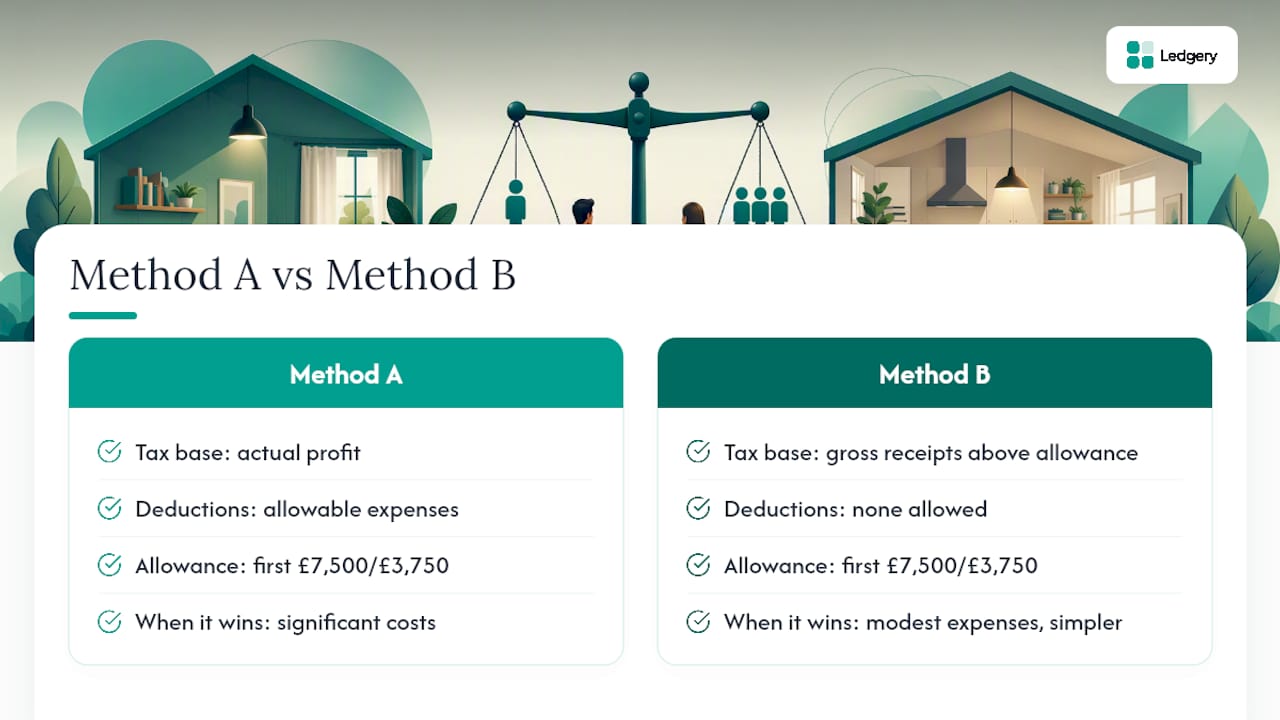
Method A taxes your actual profit. You add up your rental receipts, deduct allowable expenses (a share of heating, council tax, wear and tear, cleaning) and any relevant capital allowances, and pay tax only on what is left. HS223 confirms this is the default unless you elect otherwise.
Method B ignores expenses altogether. You pay tax only on the gross receipts above your £7,500 (or £3,750) allowance, with nothing deducted.
As a rule of thumb: if your allowable expenses are modest, Method B often wins because it is simpler and the amount taxed can be smaller. If you have significant costs, big utility bills, a mortgage-linked service charge, or major repairs, Method A usually leaves you better off. Run both calculations before you file.
Moving home, joint owners and short lets: how the numbers actually work
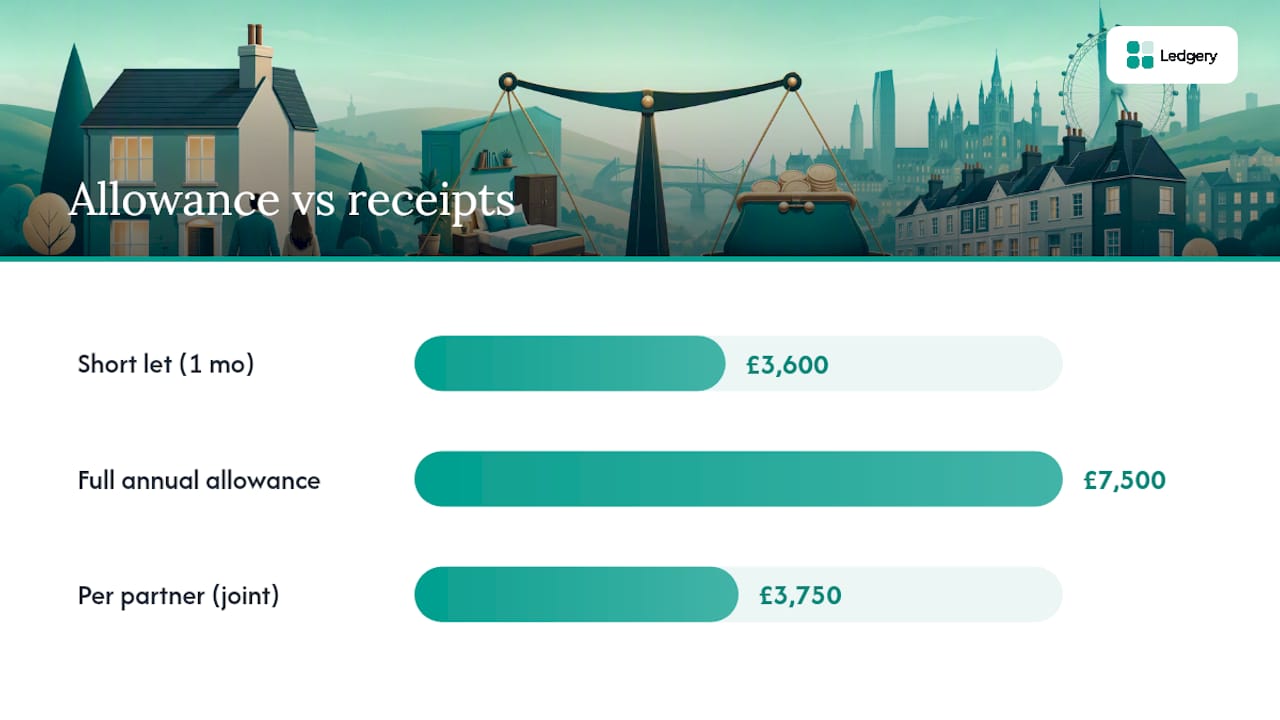
A one-month short let charging £900 a week can bring in £3,600 in that period alone. Stack that against other lodger income earlier in the tax year and you can breach £7,500 well before the year ends, even though the letting itself felt brief and casual. The allowance is not pro-rated for short stints; it is a fixed annual figure.
Some situations catch people out more than others:
- Moving mid-year: HS223 requires you to add together receipts from your old home and your new home when checking whether you have gone over the limit for that tax year.
- Joint owners: if you and a partner both take in lodger income from the same house, the £7,500 basic amount is halved to £3,750 each, not doubled.
- Short lets: high receipts over a brief period can still force a Method A or Method B decision, so keep a running total through the year rather than checking only at the end.
Pro Tip: Keep a simple running total of gross rental receipts from the start of the tax year, updated every time money lands, rather than trying to reconstruct it in January.
What are the benefits and limitations of the Rent a Room Scheme?
The upside is real simplicity: up to £7,500 (or £3,750 shared) arrives tax-free with no return to file if you stay under the limit, and less paperwork even once you do go over it and pick Method B.
The limitation that catches out ambitious landlords is that the scheme cannot be used to create a loss. If you have high allowable expenses, perhaps a big refurbishment or expensive shared utilities, opting out and reporting on the standard property pages might let you claim that loss against other income instead. Renting also has knock-on effects for means-tested benefits and council tax, so check with MoneyHelper or Citizens Advice before assuming the scheme is free of wider consequences.
Why good record-keeping decides which method wins
Choosing between Method A and Method B is really a receipts problem in disguise. You cannot know if your expenses beat the flat £7,500 allowance unless you have actually tracked them.
Scanning receipts as they arrive and organising them into quarterly totals turns a guessing game into a genuine comparison, and it makes the property income allowance versus Rent a Room decision far less stressful. Structured quarterly summaries and deadline alerts also cut the risk of missing the 31 January filing window, which matters more than ever as MTD requirements tighten record-keeping expectations for landlords.
— Jason
A simpler way to track your Rent a Room income
Deciding between Method A and Method B comes down to one thing: knowing your real expenses, not guessing at them in January. A tool can let you photograph receipts as they land and organise them into quarterly totals automatically.
That running picture is what makes the comparison honest. If your logged expenses are already close to your Rent a Room allowance, Method A is worth calculating properly rather than defaulting to gross receipts out of convenience. Ledgery also sends deadline alerts ahead of self assessment dates, so the choice between methods gets made with time to spare rather than under pressure. If you are letting a room and want your expenses tracked properly from day one, you can start with Ledgery and use the free first quarter to see whether Method A or Method B suits your numbers before committing to anything.
This article is general information, not a substitute for advice from a qualified financial advisor. Consult a qualified financial professional about your own circumstances before acting on anything here.
Sources
- Rent a room in your home: The Rent a Room Scheme
- HS223 Rent a Room Scheme (2026)
- PIM4010 - Rent-a-room: exemption limits
- Rent a Room scheme - how it works and tax rules
Recommended
Self-employment and property income in one subscription, first quarter free. Join the early access list and we’ll email you once, when it opens.
Join early access