Self assessment accountant cost: UK price bands for 2026

Most UK accountants charge £150 to £400 plus VAT for a standard Self Assessment return, with fixed-fee online services starting from around £50 for the simplest filings and specialist or high-street quotes reaching £500 or more. Your figure depends mostly on your income type and how tidy your records are.
- Simple return, one extra income source: expect the lower end, around £150 to £250
- Sole trader, director, landlord or multiple income streams: expect £250 to £500 or higher
- Late, disorganised, or last-minute records: expect a rush premium on top of any of the above
If your affairs are simple and your paperwork is in order, check the sole trader or employed bands below. If you have rental income, capital gains, or you’re filing close to the deadline, skip ahead to the sections covering add-ons and penalties before you request a quote.
TL;DR:
- Fees are highest for complex filings such as multiple income streams, rental properties, or last-minute submissions, often exceeding £400 plus VAT.
- Starting from early October and submitting records before the January 31 deadline can significantly lower both HMRC penalties and accountant premiums.
- Improved record quality, including digital receipts and an organized bookkeeping system, can reduce accountant costs by up to £200.
- Clarifying scope and requesting a fixed engagement letter helps prevent scope creep and unexpected charges.
- Using receipt-capture software and submitting quarterly records can lower processing time and therefore reduce overall accountant fees.
Table of Contents
- How much does a self assessment accountant cost by filer type?
- What makes an accountant’s quote go up or down?
- One-off filing or a monthly package: which costs less?
- What do add-ons like rental income and capital gains cost?
- How do HMRC deadlines and penalties affect the price?
- Is a DIY tax return cheaper than paying an accountant?
- How can you lower your accountant’s quote?
- Why receipt-capture software can shrink your accountant’s bill
- Key Takeaways
- Sources
How much does a self assessment accountant cost by filer type?
The £150 to £400 plus VAT range that Sleek reports as typical for a standard UK return sits at the centre of most quotes, but where you land in that range depends heavily on which category you fall into.
- Employed with extra income (dividends, side income, a rental flat): £150 to £250. This is the simplest category accountants deal with, usually involving one or two extra schedules on top of a P60.
- Sole trader or freelancer: £200 to £350. Fees rise with turnover and the number of expense categories claimed.
- Company director filing a personal return: £200 to £400, often bundled into a wider company accounts package rather than priced alone.
- Partnership: £300 to £500 per partner return, since partnership income allocations add extra calculation work.
- Landlord: £200 to £400 for a single property, rising per additional let (more on this in the add-ons section below).
Alto Accounting’s market survey puts the broader 2026/27 range at £150 to £500, with the top end driven by dividends, capital gains, or rental income stacked on top of employment income. As an illustrative example, a freelance graphic designer with clean bookkeeping software records might pay close to £220, while a landlord with two properties and a small share portfolio could see a quote nearer £450.
Location matters too. VAT is charged on top of most quoted fees unless the accountant states their price as VAT-inclusive, so always ask which basis a headline figure uses before comparing two quotes.
What makes an accountant’s quote go up or down?
Four things drive the number an accountant gives you, and understanding them lets you influence your own quote before you even ask for one.
- Record quality and transaction volume. A shoebox of receipts takes far longer to process than a clean spreadsheet or app export, and accountants price largely on time.
- Number of income types. Rental income, dividends, foreign earnings and capital gains each require a separate schedule, and each one adds preparation time.
- How close you are to 31 January. Firms that take on new clients in December or January often apply a rush fee, or decline the work outright, because their capacity is already stretched. Expertsure notes that onboarding in this window is one of the most common triggers for a higher quote.
- Whether bookkeeping is included. A quote that only covers the tax return itself will be cheaper than one that also tidies up your books first. Ask explicitly what’s in scope.
Pro Tip: Ask your accountant for a written engagement letter that spells out exactly what’s included. Firms increasingly charge separately for “quick questions” outside the agreed scope, so an unclear brief is one of the fastest ways to see your bill creep upward.
One-off filing or a monthly package: which costs less?
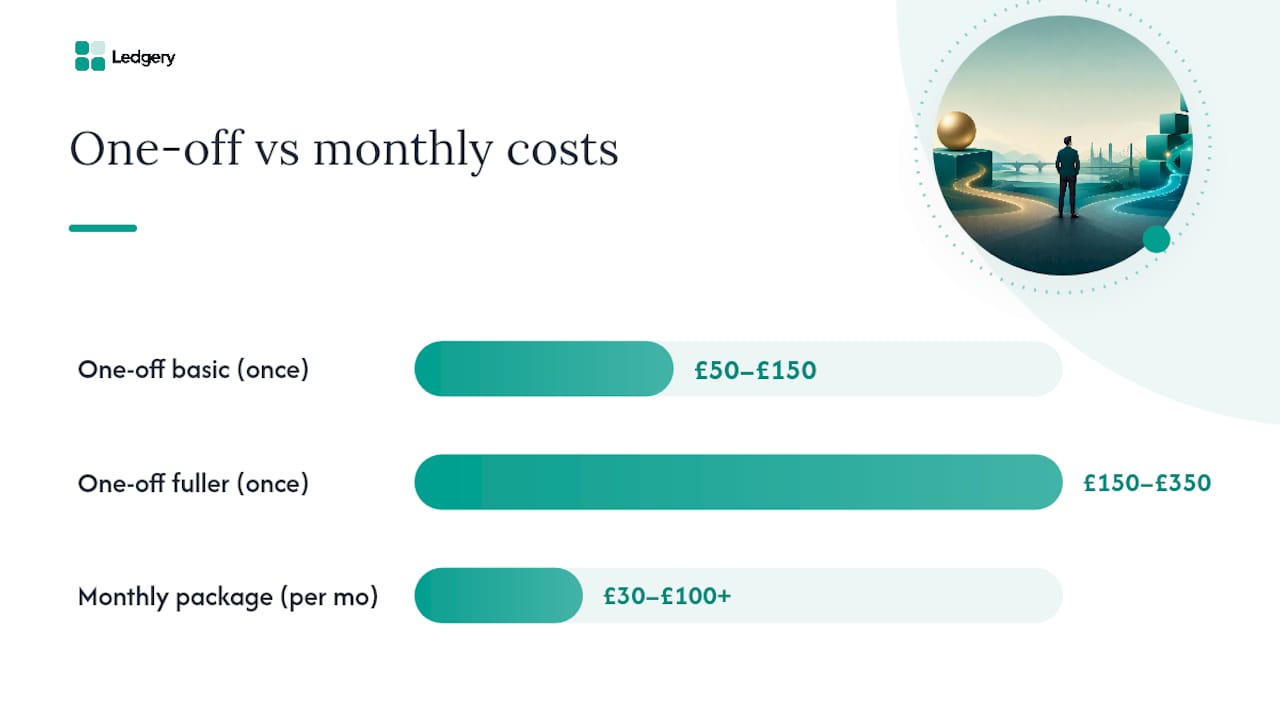
A one-off fixed-fee return covers exactly what it says: you hand over your figures once a year, the accountant files your return, and the relationship ends until next year. This suits anyone with straightforward, stable income and few queries during the year.
A monthly retainer or package spreads a similar (sometimes larger) total cost across the year and usually adds ongoing bookkeeping, VAT support if applicable, and access to ad hoc advice.
| Option | Typical price shape | Best suited to |
|---|---|---|
| One-off fixed-fee return | £50–£150 (basic) or £150–£350 (fuller sole trader service), paid once | Simple, stable income with few queries during the year |
| Monthly retainer/package | £30–£100+ per month, includes bookkeeping and some advisory access | Growing businesses, frequent queries, or those who want bookkeeping done continuously |
Expertsure’s pricing survey puts basic fixed-fee online filings from around £50, with fuller sole trader services from roughly £150. A package tends to pay for itself once you’re contacting your accountant more than a couple of times a year outside the filing window, or once your bookkeeping alone would eat several hours a month.
What do add-ons like rental income and capital gains cost?
Extra income streams rarely come free, even when your main return is straightforward.
- Rental property (SA105): Expect a per-property uplift on top of your base fee. Alto Accounting notes that landlord returns are commonly priced separately from sole trader work, with each additional let adding to the bill rather than being bundled in for free.
- Capital gains and frequent trading: Multiple disposals, cryptoasset transactions, or active share trading all add calculation time and typically carry a separate charge.
- Foreign income (SA106): Almost always billed as a distinct schedule, since it involves additional disclosure and sometimes double-taxation relief calculations.
- Director personal returns: Often bundled into a company accounts package rather than quoted alone, but ask for an itemised breakdown so you know what you’re actually paying for the personal return element.
How do HMRC deadlines and penalties affect the price?
The online filing and payment deadline is 31 January following the end of the tax year, with a paper deadline of 31 October for anyone who still files by post. Miss the online deadline and HMRC’s penalty structure kicks in fast.
- £100 fixed penalty, applied immediately once you’re even a day late, regardless of whether you owe any tax.
- Daily penalties of £10 after three months late, up to a maximum of £900.
- Further penalties at six and twelve months, each the greater of £300 or 5% of the tax due.
Accountants know this timeline as well as HMRC does, which is why quotes rise sharply for work handed over in December or January. Expertsure warns that many firms either apply a rush fee or refuse new clients entirely during this window. Handing your records over in October or earlier is one of the simplest ways to avoid both HMRC penalties and accountant premiums.
Is a DIY tax return cheaper than paying an accountant?
Filing your own return costs nothing beyond your time, but that time adds up. Research and preparation for a moderately complex return commonly takes a self-employed filer six to ten hours a year once you include gathering receipts, checking allowable expenses, and navigating HMRC’s online system.
- Work out your effective hourly cost. Ten hours of your own time against a £300 accountant fee works out to £30 an hour, roughly what many freelancers charge for a day of client work.
- Factor in deductions you might miss. Accountants routinely spot allowable expenses, capital allowances, or reliefs that self-filers overlook, and these can easily exceed the fee itself.
- Consider penalty risk. A single filing mistake or missed deadline can cost more in penalties than several years of accountant fees combined.
Pro Tip: If HMRC opens an enquiry into your return, having an accountant who prepared it gives you someone who already understands your figures and can represent you, which is worth far more than the original filing fee.
How can you lower your accountant’s quote?
Small preparation steps before you even request a quote can shave a genuine amount off the final bill.
- Prepare a minimal documentation pack. Bank statements, invoices, and a simple expense summary reduce the back-and-forth that eats billable hours.
- Use cloud bookkeeping or a receipt-capture app. Digital records mean less reconciliation time, and Expertsure’s data suggests tidier records can shave £50 to £200 off a typical fee.
- Bundle related services. If you need both a company return and a personal director return, ask for a combined quote rather than paying two separate setup fees.
- Request a scoped, fixed-fee engagement letter. Agree in writing what’s included before work starts, and check your invoices follow standard UK invoicing requirements so there’s no ambiguity later.
Pro Tip: Send your records in a single organised batch rather than trickling receipts over several weeks. Accountants bill partly on the number of times they have to reopen a file, not just total hours.
Why receipt-capture software can shrink your accountant’s bill
Every hour an accountant spends chasing missing receipts or reconciling a messy spreadsheet is an hour billed to you. Scanning receipts as they happen and organising them into quarterly packs, the approach HMRC’s Making Tax Digital guidance points towards for the future of Self Assessment, gives your accountant a clean starting point instead of a shoebox.
- Fewer hours spent reconciling means less time billed at your accountant’s hourly or scoped rate
- Quarterly organisation spreads the admin burden across the year instead of dumping it all in January
- Digital records also make it easier to justify accountant fees as allowable business expenses, reducing your net cost further
Ledgery builds this workflow around a simple photo of each receipt, turning it into an organised quarterly record ready for your accountant or for direct HMRC submission.
A balanced view on cost versus compliance
Paying for an accountant buys certainty, not just a filed form. If your income is simple and stable, a one-off fixed fee is fine. Once your affairs get more layered, a package earns its cost.
— Jason
Key Takeaways
Self Assessment accountant fees in the UK typically range from £150 to £400 plus VAT, with price driven mainly by income complexity, record quality, and filing timing.
| Point | Details |
|---|---|
| Match your filer type | Employed-plus-extra sits at £150 to £250; sole traders, directors, and landlords typically run £200 to £500. |
| Prepare records early | Digital receipts and tidy bookkeeping can cut £50 to £200 off a typical quote. |
| File well before 31 January | Late handovers trigger both HMRC penalties and accountant rush fees. |
| Ask for a scoped fixed fee | A written engagement letter avoids scope creep and surprise charges. |
| Consider a software-led approach | Quarterly receipt capture reduces reconciliation time and the hours billed. |
This article is general information, not a substitute for advice from a qualified financial advisor. Consult a qualified financial professional about your own circumstances before acting on anything here.
Sources
Recommended
Self-employment and property income in one subscription, first quarter free. Join the early access list and we’ll email you once, when it opens.
Join early access